dishwasher not draining
So you just finished a long dinner, stacked every last plate and fork into the dishwasher, hit that glowing start button… and then nothing. Or worse — it starts… only to leak water all over the floor like it’s throwing a tantrum. Sound familiar? If so, welcome to the not-so-glamorous world of appliance hiccups — specifically, the wonderful chaos that is a misbehaving dishwasher.
Before you toss in the towel or dial up a pricey technician, let’s talk. No tech jargon. No robotic “quick fixes.” Just honest, slightly messy, real-life advice from someone who’s been there, mopped that.
The Dishwasher That Quit Mid-Shift
We expect dishwashers to be silent kitchen warriors — get in, get out, leave the dishes sparkling. But when something goes off track, they can become a source of quiet frustration.
Here’s the thing: dishwashers are surprisingly complex under the hood. Pumps, valves, float switches, sensors — all working in harmony to give you those squeaky-clean results. But when one piece fails, the domino effect kicks in.
And that’s where you step in.
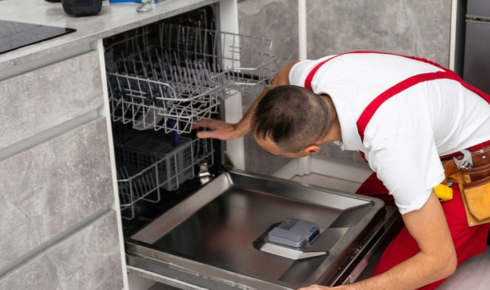
When Your Dishwasher Won’t Drain (and You’re Elbow-Deep in Water)
You open the door expecting steam and sparkle… and instead find a mini swimming pool. Ew.
This is one of the most common dishwasher issues, and while it’s gross, it’s usually fixable without a full-blown emergency call. Here’s what might be going on:
- Clogged filter or drain basket: Food bits, seeds, and even broken glass can collect and block the flow. Take out the bottom rack, locate the filter, and clean it out thoroughly.
- Kinked or clogged drain hose: If your dishwasher connects to the sink drain, check the hose for twists or gunk buildup.
- Garbage disposal backlog: If you’ve recently installed a disposal or haven’t cleared it in a while, it could be causing a bottleneck.
- Drain pump failure: This one’s a bit more technical, but if the pump isn’t running or making weird noises, it could be the culprit.
Bottom line: when your dishwasher not draining becomes your nightly routine, start with the basics before panicking. And yes, wear gloves — trust me.
That Subtle (or Not-So-Subtle) Puddle of Doom
You know the one — the little pool of water right beneath the dishwasher that starts as a mystery and grows into a full-blown leak if ignored.
Leaks are tricky. Sometimes they’re barely noticeable, other times they make you question your kitchen tiles.
Common culprits?
- Worn door gasket: The rubber seal around the door can warp or crack with age.
- Loose or damaged hoses: Both the intake and drain hoses need to be firmly connected and free of cracks.
- Overfilling: Yep, too much detergent or the wrong type can cause excessive suds and overflow.
- Cracked tub or faulty float switch: These are rare but possible — especially in older models.
A few drops here and there may not seem urgent, but consistent leakage can cause long-term damage to your floor and cabinetry. If your dishwasher leaking episode is becoming a regular drama, it’s time to investigate — or call in backup before it escalates.
The Dreaded “Click But No Clean” Phenomenon
Okay, so the dishwasher seems to be running. You hear the hum, maybe a little click, and then… nothing happens. Or it cycles through and leaves dishes feeling like they’ve just been misted, not washed.
This problem isn’t as rare as you’d think.
Check:
- Water inlet valve: No water = no clean. If the valve is stuck or clogged, water won’t enter the machine.
- Spray arms: Food gunk or hard water deposits can block the tiny holes, making them spin uselessly.
- Heating element: If the water isn’t heating properly, detergent won’t dissolve, and grease won’t lift.
And sometimes — brace yourself — the problem is the detergent. Yup. If you’ve recently switched brands or used an old batch, it might not be doing its job. Go figure.
When to DIY and When to Dial
Let’s be real: Not every dishwasher issue needs a professional. Some fixes are just a screwdriver and flashlight away. But there’s a line between “I can handle this” and “This might void my warranty or flood my kitchen.”
DIY-friendly issues:
- Cleaning filters and spray arms
- Unclogging drain hoses
- Replacing gaskets
Call a pro if:
- You smell burning or hear grinding sounds
- There’s electrical trouble or tripped breakers
- Water is leaking inside your cabinetry
- You’ve tried the basic fixes… and nothing changes
Don’t let pride cost you more in the long run.
Don’t Just Fix — Prevent
Most people only learn about dishwasher maintenance after something breaks. But here’s a little secret: a lot of the time, the problems are avoidable.
Try these habits:
- Rinse off large food particles before loading.
- Clean the filter every few weeks — it takes 5 minutes.
- Run hot water in the sink for a few seconds before starting the dishwasher to boost initial wash temp.
- Use high-quality detergent and rinse aids.
- Leave the door slightly open after use to prevent mould and odours.
Your future self will thank you.
Final Thoughts: It’s Just an Appliance… Until It Isn’t
When the dishwasher’s humming along, it’s invisible. But when it breaks? Suddenly it’s everything.
We rely on these machines more than we realize — not just for clean dishes, but for peace of mind after a long day. So when things go wrong, it’s more than just an inconvenience. It’s personal.
Taking a few minutes to learn how your machine ticks — or why it’s acting up — can save you money, stress, and a whole lot of soggy dish towels. Whether it’s troubleshooting a dishwasher repair on a quiet Sunday or finally calling in a pro, just know this: you’re not alone.