
Water is easy to take for granted when it looks clear and tastes normal. We turn on the faucet, fill a glass, wash vegetables, make coffee, and get on with the day. But water can contain substances that aren’t visible at all, and different water sources can have very different characteristics.
For homeowners and businesses, the challenge isn’t simply finding a filter. It’s figuring out what actually needs to be removed and choosing treatment technology that matches the job. A little knowledge can go a long way here. The right system can make water more pleasant to use while also helping protect plumbing and water-dependent equipment.
Start With a Water Test
Before shopping for filtration equipment, it’s worth understanding the water itself. A professional water test may identify hardness, sediment, pH, iron, sulfur, chlorine, dissolved solids, and other characteristics depending on the testing performed.
This matters because no single filter is designed to remove everything. A system that works beautifully for sediment might do very little for dissolved minerals. Likewise, a treatment method designed for drinking water may not be appropriate for an entire commercial building.
Testing turns a vague water-quality concern into something much more manageable.
Instead of guessing, you have information to work with.
What Sediment Filters Actually Do
Sometimes the simplest treatment is also one of the most useful. sediment filters are designed to capture suspended particles such as sand, silt, rust, and other physical debris, depending on the filter’s design and rating.
Sediment filtration can be especially helpful when incoming water contains visible particles or when plumbing conditions introduce rust or debris into the supply.
These filters are also often used as a first stage in a larger treatment system. By capturing larger particles early, they can help protect more sensitive equipment farther down the line.
Of course, sediment filters don’t remove dissolved substances simply because the water passes through them. That’s an important distinction to remember.
Why Filter Selection Matters
Walk into a water-treatment showroom or search online and you’ll find plenty of options. Different cartridges, membranes, tanks, media, and technologies can make the decision feel more complicated than it needs to be.
The filter should always match the water problem.
For example, carbon filtration is commonly used for certain taste and odor concerns. Water softeners address hardness minerals. Sediment filters handle physical particles. Other technologies are designed for specific dissolved contaminants.
Buying the most expensive filter isn’t necessarily buying the best filter. The better choice is the one designed for your actual water conditions.
When Reverse Osmosis Makes Sense
For drinking and cooking water, some homeowners and businesses want a higher level of treatment than a conventional filter can provide.
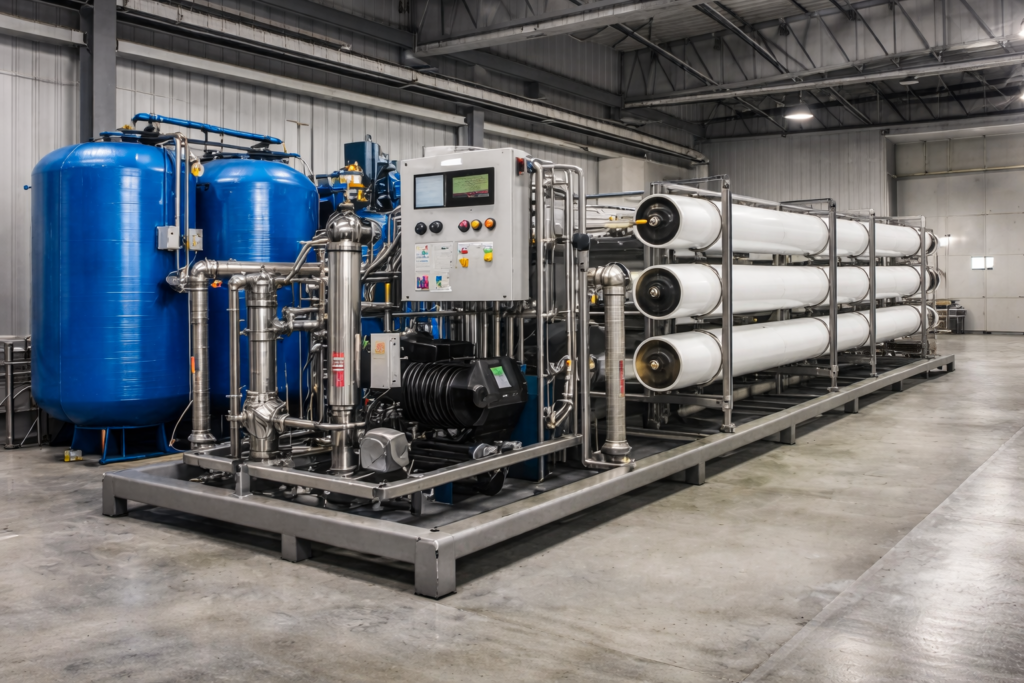
That’s where reverse osmosis systems can become useful. Reverse osmosis uses a semipermeable membrane to reduce many dissolved substances from water. Most systems combine the membrane with other filtration stages, such as sediment and carbon filters.
RO is commonly used at drinking-water points rather than treating every gallon entering a property. This can make sense because only a relatively small portion of household water is actually consumed or used for cooking.
However, RO systems do require maintenance. Filters and membranes need replacement, and system performance depends on factors such as water pressure and incoming water quality.
Not Every Water Problem Is Visible
One of the tricky things about water quality is that appearance doesn’t tell the whole story.
Water can look perfectly clear while containing dissolved minerals or other substances that aren’t visible to the naked eye. Conversely, cloudy water may simply contain suspended particles that can be addressed through appropriate filtration.
That’s why relying on appearance alone can be misleading.
Taste and odor can provide clues, but they aren’t a substitute for testing. If there’s a sudden change in water quality, particularly in a private water supply, investigating the cause is a sensible first step.
Specialized Treatment for Specific Concerns
Some water-quality problems require technology designed for a particular substance or application. In these cases, specialized contaminant removal may involve advanced filtration media, membranes, ion exchange, oxidation, or other treatment processes.
The correct technology depends entirely on what the testing reveals.
For example, a treatment approach for iron isn’t necessarily the same as one used for a dissolved organic compound. A system intended for microbiological concerns has a different purpose again.
This is why broad claims that one system removes “everything” deserve a little skepticism. Water chemistry is complicated, and treatment should be specific.
Protecting Appliances and Plumbing
Water treatment isn’t only about what comes out of the drinking faucet.
Hardness minerals can contribute to scale inside water heaters and appliances. Sediment may accumulate in valves or fixtures. Certain water conditions can also affect commercial equipment used for beverages, food preparation, laundry, or manufacturing.
Treating the water appropriately can help reduce some of these stresses.
Still, filtration isn’t a replacement for maintenance. Appliances should continue to receive regular cleaning and servicing according to their manufacturers’ recommendations.
Think of water treatment as one piece of a bigger maintenance puzzle.
Commercial Facilities Have Different Needs
A small office and a manufacturing facility obviously don’t use water in the same way.
Restaurants may need treated water for cooking, ice machines, coffee equipment, and dishwashing. Hotels and apartment properties have large fluctuations in water demand. Industrial facilities may need carefully controlled process water.
Flow rate is therefore an important consideration. A system needs to handle peak demand, not just average daily consumption.
Proper sizing can help avoid pressure problems and inconsistent performance. It’s a technical detail, sure, but it’s one that becomes very noticeable when a system is undersized.
Maintenance Should Be Planned From Day One
Every treatment system has a maintenance schedule. Filters become loaded, membranes eventually need replacement, and specialized media may require servicing.
Before installation, ask what routine maintenance involves and how frequently components need attention.
Keeping a simple record of filter changes, inspections, water tests, and professional service can make the whole process easier. Set reminders if necessary. There’s nothing particularly exciting about maintenance, but missing it can turn a manageable system into an expensive problem.
Choosing a Filtration System With Confidence
Good water treatment begins with a simple idea: treat the problem you actually have.
Test the water first. Understand what different filtration technologies can and cannot do. Consider whether treatment is needed at one faucet, throughout a home, or across an entire commercial facility. Then look at maintenance and long-term operating costs.
Sediment filters, reverse osmosis, carbon filtration, softening, UV treatment, and specialty technologies all have their place. The trick is knowing where that place is.
In the end, the best water-treatment system isn’t necessarily the biggest or most sophisticated one. It’s the system that fits the water, the property, and the people using it.
When that match is right, water treatment becomes pleasantly unremarkable. The water tastes better, equipment has fewer avoidable concerns, and you can get on with your day without giving the faucet another thought.